Next-Gen Graphics: How Far Can Gaming Visuals Go?
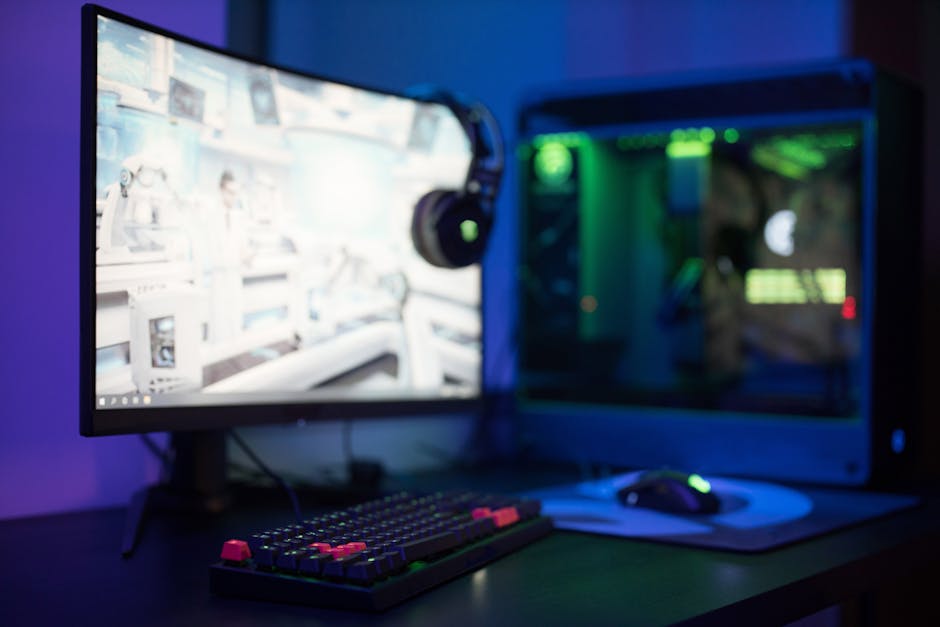
Next-Gen Graphics: How Far Can Gaming Visuals Go?
Gaming visuals have undergone a remarkable transformation over the past few decades. From pixelated sprites to photorealistic environments, the evolution of graphics technology has been nothing short of revolutionary. But with the rise of next-gen consoles and powerful gaming PCs, one question looms large: how far can gaming visuals go?
The Current State of Next-Gen Graphics
Today’s gaming industry is defined by cutting-edge technologies like ray tracing, 4K resolution, and high refresh rates. Consoles like the PlayStation 5 and Xbox Series X, as well as high-end GPUs from NVIDIA and AMD, are pushing boundaries with hyper-realistic lighting, detailed textures, and lifelike animations. Games like Cyberpunk 2077, God of War Ragnarök, and Forza Horizon 5 showcase the stunning possibilities of modern graphics engines.
Ray tracing, in particular, has been a game-changer. By simulating the way light interacts with surfaces in real time, it creates more immersive and visually accurate environments. Combined with technologies like DLSS (Deep Learning Super Sampling), developers can maintain high performance without sacrificing visual fidelity.
Where Are We Headed? The Future of Gaming Visuals
The next frontier in gaming graphics is likely to be powered by artificial intelligence and machine learning. AI-driven upscaling techniques are already improving frame rates and image quality, but future advancements could allow for real-time generation of ultra-detailed textures and even entire environments.
Another exciting development is the rise of volumetric rendering, which simulates complex light interactions in fog, smoke, and other translucent materials. This could lead to even more dynamic and atmospheric game worlds. Additionally, breakthroughs in neural rendering and generative AI may soon allow games to create unique visuals on the fly, reducing the need for pre-rendered assets.
Beyond visuals, the next-gen graphics revolution will also focus on immersion. Technologies like haptic feedback, eye-tracking, and neural interfaces could redefine how players experience games, making the line between virtual and reality blur even further.
Limitations and Challenges
Despite these advancements, there are still challenges to overcome. The demand for higher resolutions and frame rates requires immense computational power, which can be costly and energy-intensive. Additionally, as graphics become more realistic, ethical concerns about deepfakes and AI-generated content in games may arise.
Another hurdle is the balance between visual fidelity and performance. Not all players have access to high-end hardware, so developers must optimize their games to run smoothly across a range of devices.
Conclusion: The Sky’s the Limit
The future of gaming visuals is brimming with potential. From AI-enhanced graphics to fully immersive experiences, the possibilities are endless. While we may never reach a point where games are indistinguishable from reality, the journey toward ever-more-stunning visuals promises to keep gamers on the edge of their seats for years to come.